Cover Letters
A cover letter connects your resume to one specific opportunity. It demonstrates how you think and write, and it's your chance to say why you chose this role and this organization.
Before you write
Pick two or three requirements from the posting that you can back up with real examples. Then learn something specific about the organization: its mission, a recent project or the people it serves. Those examples and that detail become the core of your letter.
Say why you chose them
Employers want to know why you picked them, not just why you want a job. Name one specific reason: a project they're known for, the people they serve, a value you share, or a conversation with someone who works there. One honest, specific reason does more than a paragraph of general praise.
A simple structure
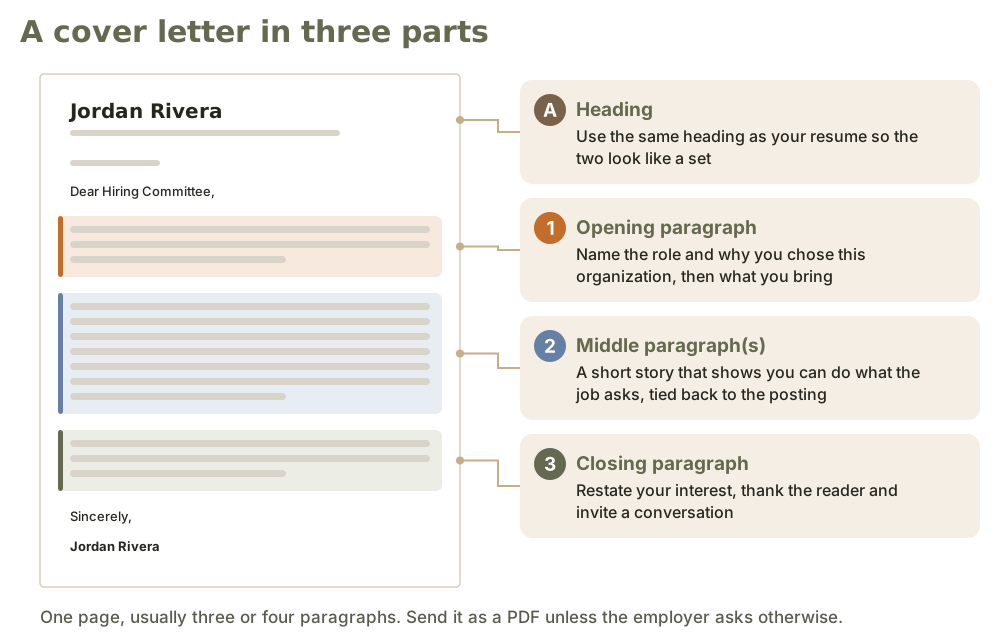
- Opening paragraph: name the position and why you chose this organization, then say in a sentence or two what you bring. If someone referred you, mention them here.
- One or two middle paragraphs: tell a short story that shows you can do what the job asks. Tie each example back to the posting so the reader doesn't have to make the connection.
- Closing paragraph: restate your interest, thank the reader and say you'd welcome a conversation.
Keep it to one page, usually three or four paragraphs.
Details that make a difference
- Address it to a person when you can find a name. "Dear Hiring Committee" works when you can't.
- Write a new letter for each application. Reusing a paragraph is fine; reusing a whole letter is obvious and doesn’t come across well.
- Use the same heading as your resume so the two look like a set.
- Send it as a PDF unless the employer asks for something else. Add your name to the file name.
- Read it out loud before you send it.
Get the templates
Our cover letter template and samples are in Handshake.
Get feedback
Book an appointment and bring the job posting. We'll look at how well your letter answers it, and you'll leave knowing what to strengthen.
A note on AI
Cover letters written by AI tend to sound like everyone else's. Your examples and your reasons for choosing the organization are what make a cover letter unique and effective, so write them yourself. Consider tools for proofreading.